The Loyalty Tax: What Poorly Designed Programs Really Cost Brands
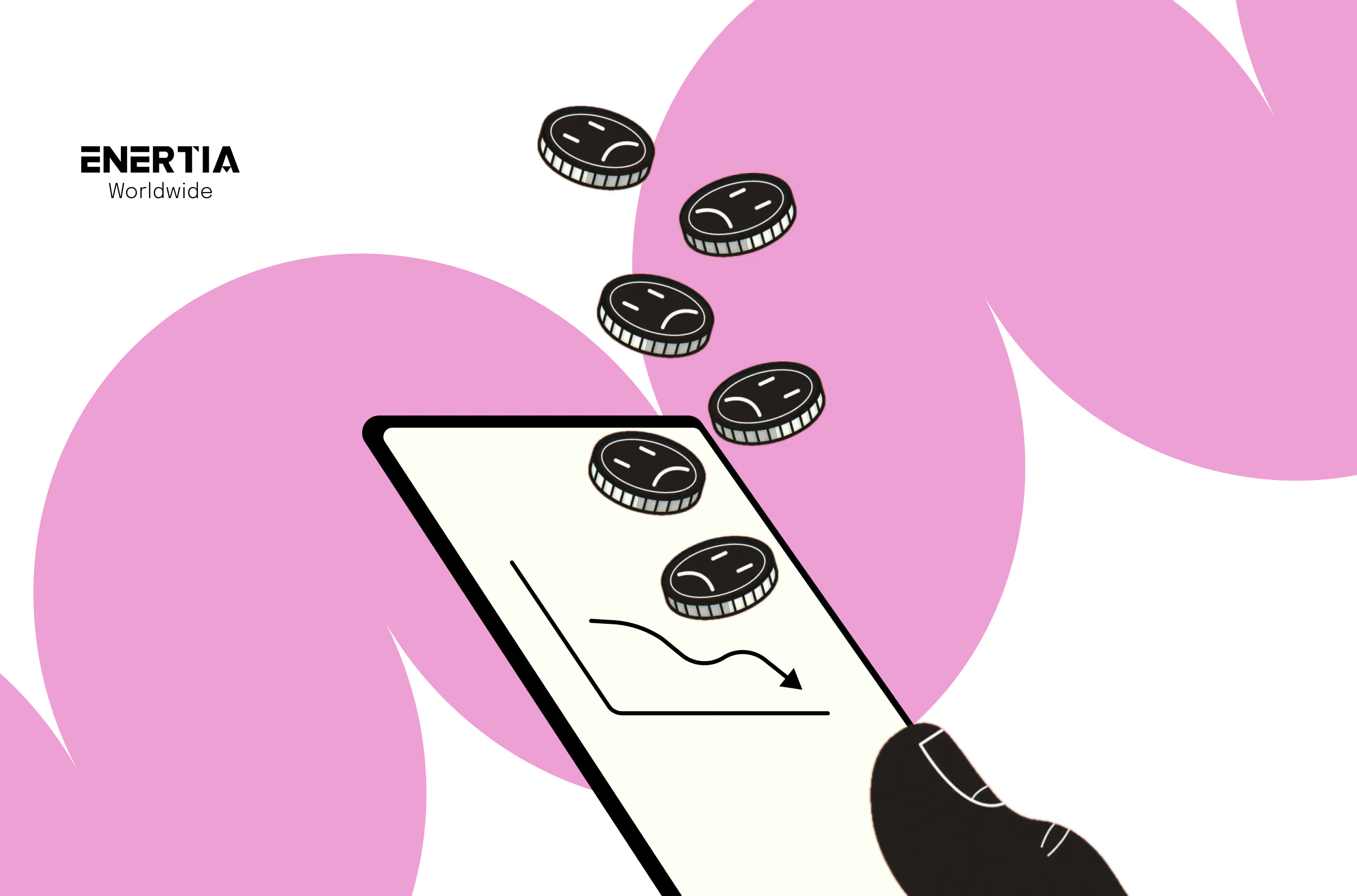
Loyalty programs are designed to strengthen relationships, encourage repeat engagement, and support long-term business growth. But when they are poorly designed, they can quietly create costs that are often overlooked. Low participation, operational inefficiencies,wwww1₹ inconsistent reward experiences, and declining trust can all reduce the value a loyalty program is designed to deliver. This hidden cost can be thought of as the loyalty tax—the price businesses pay when their loyalty strategy fails to meet participant expectations.
When Complexity Replaces Simplicity
One of the most common reasons loyalty programs underperform is unnecessary complexity. Lengthy enrolment processes, confusing earning rules, limited reward options, or difficult redemption journeys can discourage participants before they fully engage. Even programs with attractive rewards struggle when participants find it difficult to understand or use.
A successful loyalty program should make participation feel simple and rewarding from the very beginning. The easier it is for participants to engage, the more likely they are to continue interacting with the program over time.
The Hidden Cost of Operational Inefficiencies
Poor program design affects more than participant experience. Businesses also face increasing operational challenges when loyalty systems rely on manual processes, disconnected platforms, or fragmented data. Teams spend valuable time managing fulfilment, reconciling reports, and resolving participant issues instead of improving the program itself.
These inefficiencies gradually increase operating costs while making it more difficult to scale loyalty initiatives. As programs grow, the operational burden often grows faster than the value the program creates.
Trust Is Difficult to Rebuild
Participants expect loyalty programs to be reliable. Delayed rewards, inconsistent redemption experiences, inaccurate point balances, or poor communication can quickly reduce confidence in the program. Once trust begins to decline, participation often follows.
Building trust requires consistency across every interaction. When businesses deliver rewards accurately, communicate clearly, and create reliable participant experiences, loyalty programs become stronger and more sustainable over the long term.
Designing for Long-Term Value
The most successful loyalty programs are built around participant experience as much as business objectives. They remove unnecessary friction, offer meaningful reward choices, and connect with the systems that support engagement, fulfilment, and reporting. Rather than reacting to operational challenges as they arise, businesses create an ecosystem that is designed to grow with changing customer and partner expectations.
This approach allows organisations to focus less on solving day-to-day issues and more on building stronger relationships with the people their loyalty programs are meant to serve.
How Enertia Helps Businesses Reduce the Loyalty Tax
Reducing the loyalty tax starts with building connected ecosystems instead of disconnected processes. Through eNexus, businesses can manage loyalty and incentive programs while connecting engagement, rewards, fulfilment, and reporting within a unified platform. Combined with solutions such as Skybridge, Paynetics, and Lightswitch, Enertia helps businesses simplify operations, improve visibility, and deliver more consistent participant experiences.
Poorly designed loyalty programs rarely underperform because of the rewards themselves. They lose value when unnecessary complexity, disconnected systems, and inconsistent experiences prevent participants from staying engaged. Businesses that invest in connected loyalty ecosystems reduce hidden operational costs, strengthen participant trust, and build programs that create measurable value well into the future.