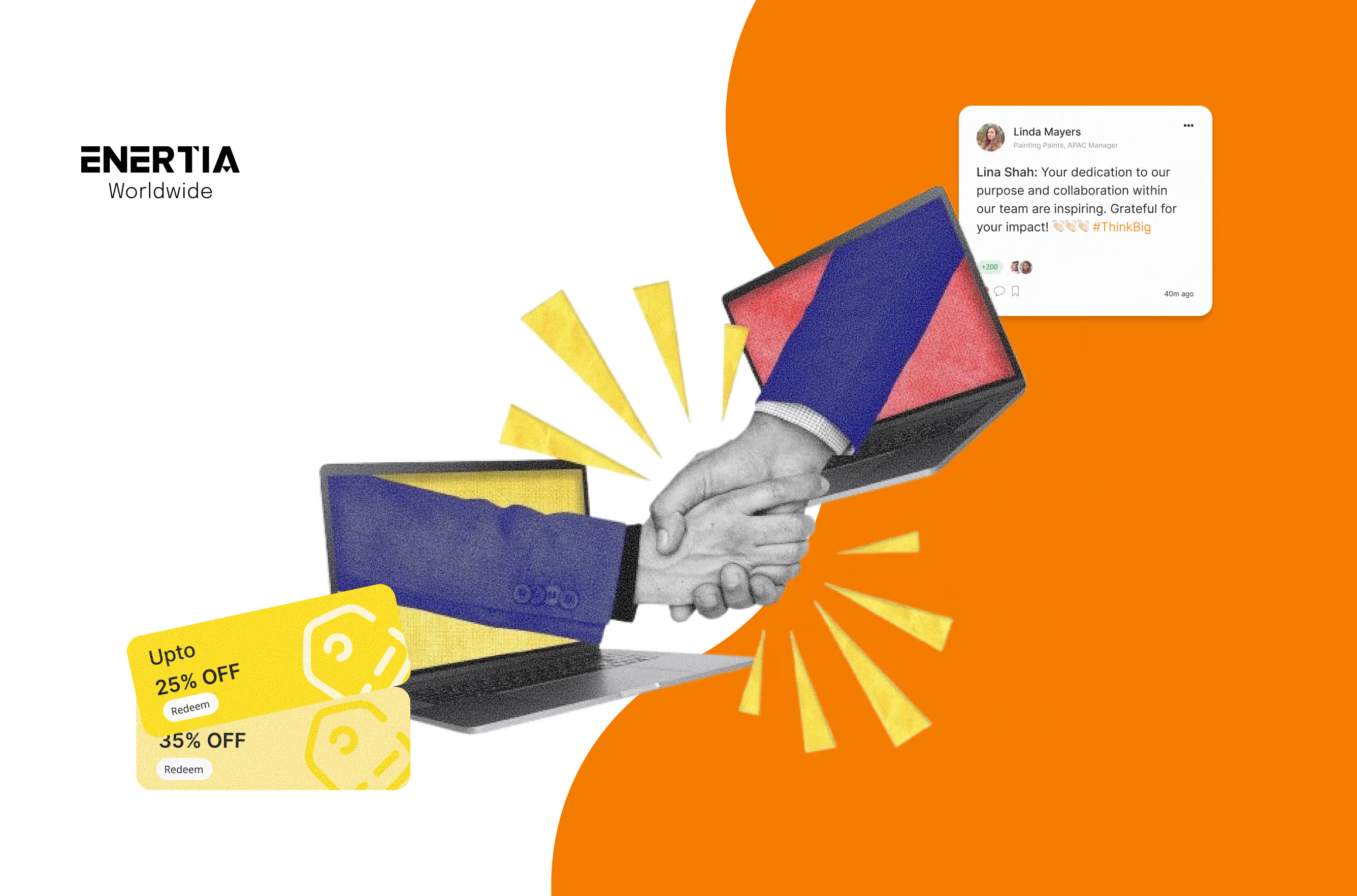
How B2B Incentive Programs Differ from Consumer Loyalty Programs
Loyalty is often associated with consumers collecting points, unlocking discounts, or earning rewards from their favourite brands. But when the audience is a distributor, dealer, contractor, or channel partner, the purpose of a loyalty program changes. B2B incentive programs are designed around business relationships, commercial behaviour, and the actions that help both sides grow.
The Audience Changes Everything
Consumer loyalty programs usually speak to an individual making purchasing decisions for themselves. B2B programs often involve partners who directly influence business outcomes, whether through sales, product recommendations, distribution, or other channel activities.
That means the program needs to understand business behaviour, not just individual purchases. A manufacturer, for example, may want to encourage distributors to increase product sales, promote a particular category, complete training, or engage more consistently with the brand.
The Motivation Is Different
Consumer loyalty often focuses on encouraging repeat purchases. The reward is typically an added benefit for choosing the brand again. B2B incentives can go further by encouraging specific behaviours that support broader business objectives.
A program might reward a partner for reaching a sales target, expanding product adoption, completing training, or increasing engagement. The objective is not simply to give something back after a transaction, but to influence behaviour that creates value for the business and its partners.
Rewards Need to Reflect the Relationship
What motivates a consumer may not necessarily motivate a business partner. Consumer programs commonly offer discounts, vouchers, products, or experiences, while B2B programs may combine rewards with performance-based benefits, recognition, incentives, or financial payouts.
The right approach depends on the audience and the behaviour being encouraged. Enertia's eNexus, for example, enables participants to redeem points across products, vouchers, and experiences, while Paynetics can convert rewards into money through bank transfers across GCC and South Asian markets.
Engagement Is More Than Redemption
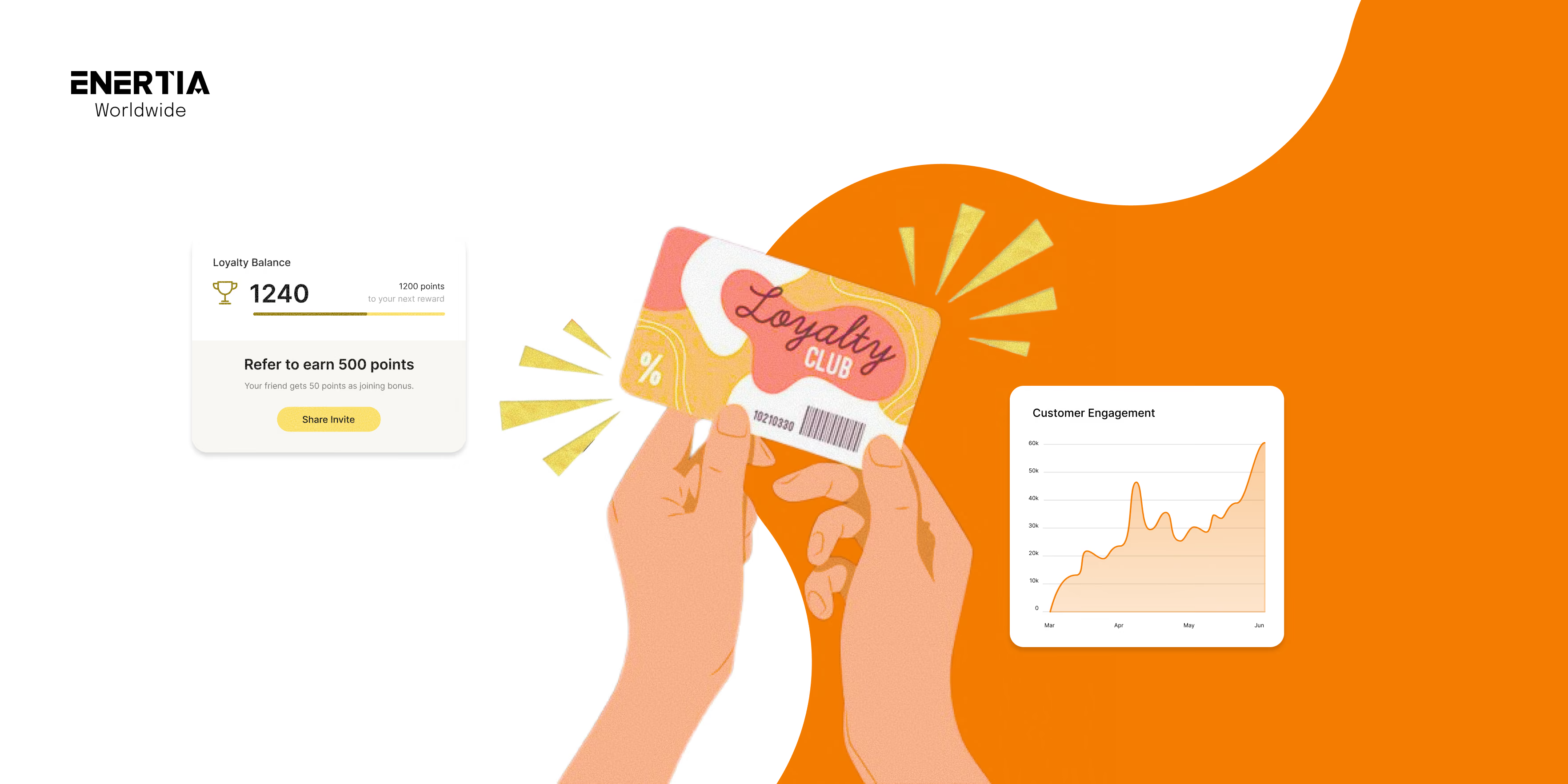
For consumer programs, engagement may be measured through purchases, app activity, or reward redemptions. B2B programs can generate a broader set of signals, including sales activity, partner participation, product adoption, training completion, and other actions linked to commercial performance.
This makes the data generated by a B2B program particularly valuable. When businesses can connect participant activity with sales and engagement data, they gain a clearer understanding of what motivates different partner groups and where the program is creating impact.
Personalisation Matters at Scale
B2B audiences are rarely uniform. A large distributor may have very different priorities from a smaller dealer or contractor. Treating every participant in the same way can therefore limit the effectiveness of the program.
Strong B2B programs can use participant data and behaviour to create more relevant experiences, whether through different reward structures, targeted communications, or incentives aligned with specific business goals. This makes the program feel less like a generic rewards scheme and more like an extension of the business relationship.
The Technology Behind the Program Matters
The difference also becomes clear operationally. B2B incentive programs often need to connect with existing business systems, manage multiple participant groups, track performance, and support rewards and fulfilment across markets.
A connected infrastructure makes this easier to manage. Enertia brings loyalty, payments, engagement, fulfilment, and reporting together across solutions such as eNexus, Paynetics, Lightswitch, and Skybridge. Its platform is positioned around helping businesses build custom loyalty programs across the supply chain.
Building Loyalty That Works for Business
Consumer loyalty and B2B incentive programs may share the same goal of creating stronger relationships, but the path to achieving it is different. B2B programs need to account for commercial behaviour, longer-term partnerships, multiple stakeholders, and the specific objectives of the businesses involved.
The most effective programs are therefore not simply consumer loyalty models adapted for a business audience. They are designed around how partners actually work, what motivates them, and how their behaviour contributes to growth.
For businesses looking to strengthen relationships across their supply chain, that distinction matters. When incentives are built around the right behaviours and supported by connected technology, loyalty becomes more than a reward—it becomes a way to build stronger, more valuable partnerships.